


NAPLAN tends to create two very different reactions in families:
Some parents dismiss it as “just a snapshot,” while others feel anxious the moment the school note comes home.
The truth is somewhere in the middle.
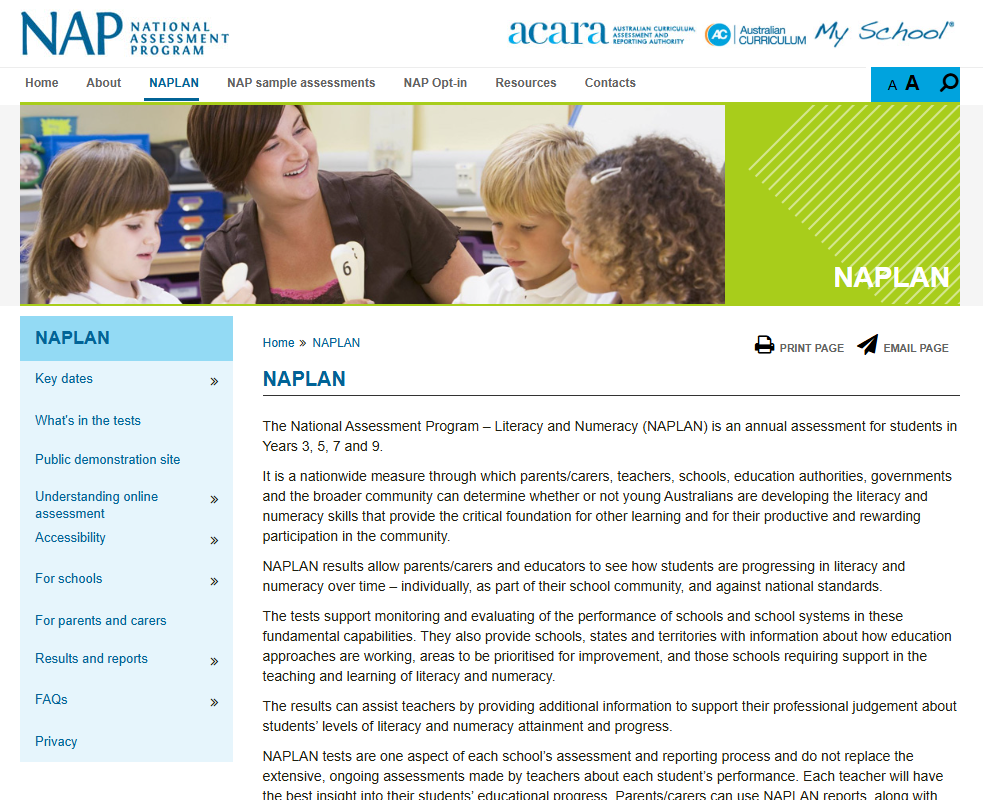
NAPLAN is a standardised literacy and numeracy assessment for Years 3, 5, 7 and 9, covering Writing, Reading, Conventions of Language (spelling, grammar and punctuation), and Numeracy.
It’s not designed as a “pass/fail” test. It’s more like a system-wide checkpoint of foundational skills students are already learning at school.
Key dates for NSW (2026)
For NSW, the NAPLAN 2026 test window is Wednesday 11 March to Monday 23 March 2026, and NSW schools are expected to complete the writing test on Wednesday 11 March 2026.
Nationally, the test window is also listed as 11–23 March 2026.
Online vs Paper
Most NAPLAN tests are done online, but Year 3 students complete the Writing test on paper, while their other tests are online.
What NAPLAN is actually testing
NAPLAN isn’t trying to trick students with brand-new content. The official guidance is very clear: the best preparation is simply learning the curriculum, because the tests are based mostly on skills students are expected to have been taught in previous years.
So rather than “cramming NAPLAN,” it makes more sense to build these habits:
- Reading: understanding the main idea, locating evidence, interpreting tone
- Writing: planning quickly, writing clearly, staying on topic
- Language conventions: spelling patterns, grammar accuracy, punctuation control
- Numeracy: number sense, problem-solving, reading graphs, applying strategies
Website : https://www.nap.edu.au/naplan
How to prepare without turning your home into a test centre
Here’s the approach I always come back to as a parent:
1) Consistency beats intensity
Ten minutes a day is often more effective than a two-hour session once a week.
A simple routine can look like:
- Reading (10–15 min): one short text + 2–3 questions (why/what evidence/what’s the point?)
- Language (5–10 min): focus only on repeat errors (punctuation, sentence structure, spelling patterns)
- Numeracy (10–15 min): one skill at a time — especially worded problems
2) Don’t ignore “familiarity”
For online tests, students benefit from being comfortable with the format and tools. NAP provides a public demonstration site with sample tests for familiarisation.
3) Keep the message calm
NAPLAN is not about “my child is smart / not smart.” The official parent resources emphasise it as a way to understand learning progress, not passing or failing.
If a child is anxious, the emotional cost can be bigger than the academic benefit.
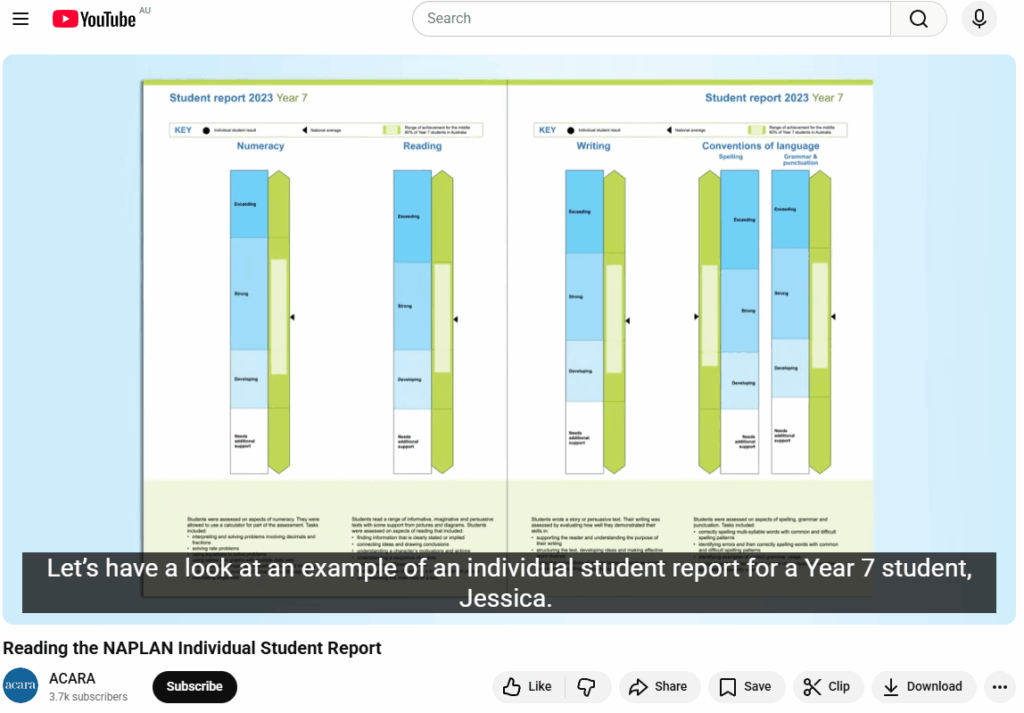
For a clearer breakdown of the report, I’ve linked a helpful video below—feel free to refer to it.
Guide Video link : https://www.youtube.com/watch?v=AcYsiLtE7a8
Where to buy the books (using the Excel list)
If your school or academy provides a book list (often shared in an Excel sheet), it’s best to stick to that list so you’re buying the correct editions.
In real life, many of these titles can be found at:
- Costco
- major bookstores
- your local newsagency
If the list includes an ISBN, search by that — it’s the fastest way to avoid buying the wrong edition.
The honest part: when NAPLAN matters more (Year 4 OC / private scholarship pathways)
Now, here’s the part many parents quietly know but don’t always say out loud:
If your child is in Year 4 and you’re considering OC, or you’re thinking about private school scholarships, NAPLAN results can become more than “just a snapshot.” Not because NAPLAN alone decides anything — but because it can act as a clear, standardised signal of how strong your child’s foundations are, especially in Reading, Writing and Language Conventions.
And the reverse is true too:
If a child’s school reports and overall results are consistently at the top end, it may be a reasonable moment to consider OC or scholarship options — not to chase labels, but because those results often reflect something deeper:
reliability, follow-through, and the ability to perform consistently over time.
That’s what “good results” often represent in the real world: not a magic talent — just proof that a child can keep going.
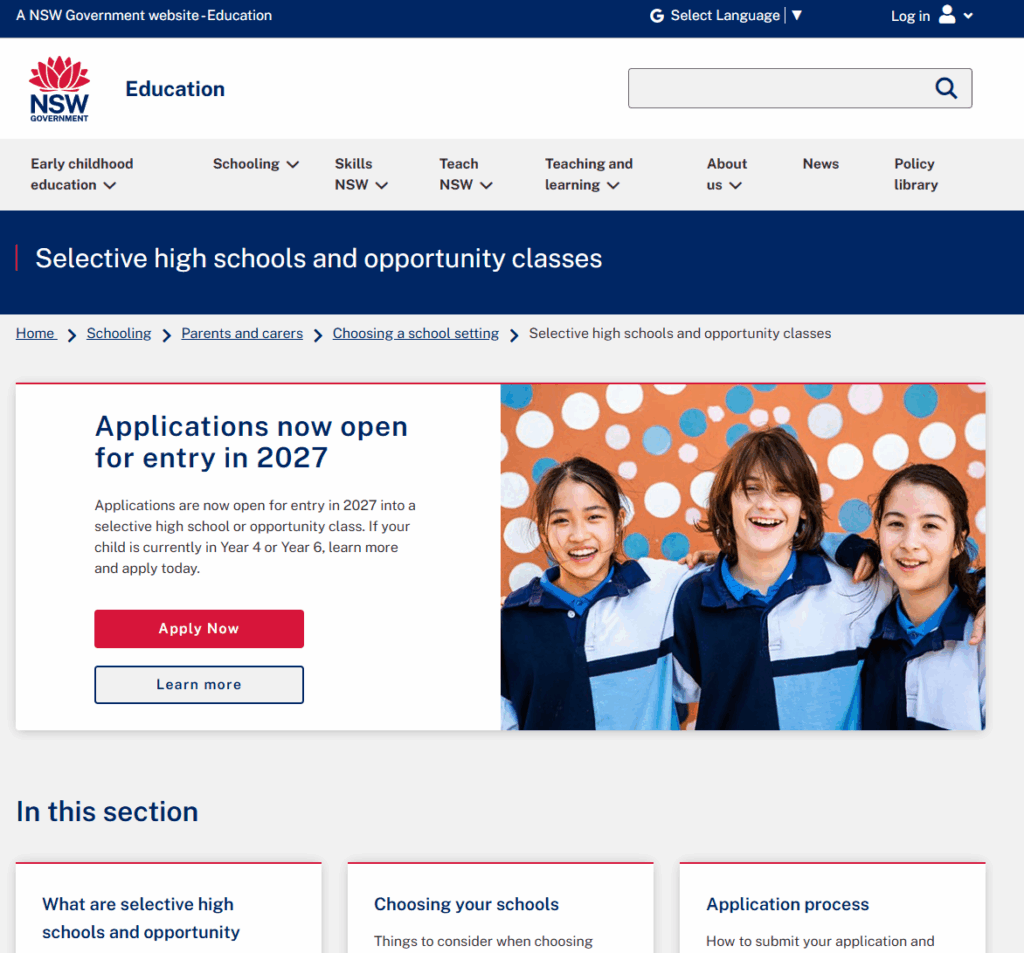
If you’re not familiar with OC or Selective Schools, I’ve included a link below—please take a look.